miércoles, 3 de agosto de 2016

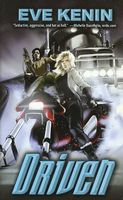
OTW Challenge: DRIVEN, by Eve Kenin / Eve Silver


A story of revenge set in a very cold future
FDB

Published: 2007
Genre: Science Fiction / Futuristic
My Rating: 3 stars

Part of a series: Northern Waste #1

This is a science fiction book, but for the second time, I haven’t chosen for this challenge a book set ‘out of this world’.

This story is set on planet Earth, but in the future, in the end of the 21st century. There was a ‘Noble War’, a couple of them as a matter of fact:


‘As if there was anything noble about a nuclear holocaust that led to tectonic plate shifts, floods, earthquakes, and the decimation of the entire world’.


There’s a very cold part in the Northern hemisphere, the ‘harsh Northern Waste’ mentioned in the blurb. Vast tundra, lots of ice, coldness, a snowy landscape... while I was reading it, it was in the middle of a heat wave in July 2016, and so it was very refreshing.

The main character, Raina, is a truck driver (an ice trucker) who has made a legend of herself as a woman who can defend herself very well in a rather hostile world. She wants to participate in a race towards Gladow Station, a Northern location, where she is supposed to take grain for the settlers, in order to win the prize which is –a lot of money. Tons of money. Enough money to buy a future for herself -and a sister that she doesn’t even know- in warmer latitudes.

But she needs a license, a trucking pass, and she contacts somebody her late father trusted, a man named Wizard. She does not know him yet. He is, of course, the ‘sexy stranger’ of the story.

He was a soldier for the government. He is a quiet man, who has nearly suppressed all emotion. A very cold person. From the beginning you ask yourself if this is a human being or a robot.


‘Wizard, who was even more of an emotional wasteland than she was.’


In any case, he’s a mercenary and has his own reasons to do everything, even to be there in contact with Raina, whose life is an open book for him –only he does not tell her anything. And she knows next to nothing about him. That bunch of secrets could destroy both of them. But at the same time, the author gives you hints that allow you to anticipate where the book is going. And it’s a nasty place.

Both are quite competent in the art of fighting and even killing, if it comes to that. She needs the money, and he has his plans to revenge. Raina could be part of it, and she is totally unaware of it. There’s a sexual tension rising between them. Certainly he is not cold in bed –or in any other place she’s with Raina. They lust after each other. And having a relationship, even if they were able to restrict it to the physical level, is the worst thing any of them could do.

The bad guy is a sadist who wants Wizard dead and Raina alive, only to kill her himself, slowly and painfully. Raina has survived until this point by being very tough, a real kick-ass and knowing when to fight and when to flight. So being together is an added risk.

At the beginning of the story I was a little bit bored, because it was all about trucks, and the road and those are things that do not interest me. Or maybe it’s just that road stories have to develop in a slow rhythm. But then the plot was more complicated when you realised that there more things in this game than a race. The world building was competent and believable. It’s a Post Apocalyptic environment where everybody fights everybody else and wants to survive, with truckers, ice pirates, rebels.... If you see some place this book compared to Mad Max, yes, it’s more or less that wild-on-the-road story, only in a frozen desert instead of a sandy one.

In the end, it was a very fast reading, with fights, and sex, and more things going on.

I enjoyed it, although I felt a little detached from the story, as if I was seeing it from behind a glass. There was also this anguish, this sensation that something horrible was going to happen and you didn’t want to see it. Like an accident in slow motion. The sex scenes are very sensual and well-written. But it was the same -I didn’t feel the emotional connection there. As if those very tough characters were seeing their own feelings through a microscope. I imagined any of them being surprised –and not very happy- when they discovered what love is and what means and how they feel.

It can be that both of them have these emotional issues.


A hollow laugh escaped her. “We make a fine pair. A man who has a computer chip instead of a heart, and a woman whose emotions were beaten out of her.”


On the other hand, I just loved it when Wizard discovers that his happiness depends on her,


But Raina had made clear that her happiness no longer included association with him. So he would give her that because... because... she mattered to him in a way that his own happiness did not.


I found it a perfect thought. He is not intimidating; he respects her feelings and desires. Therefore, it’s Raina who makes the decisions and he does not interfere. As simple as that – and I love it.

This book won the 2007 All About Romance Reader Award in the Best Cabin/Road Romance and also the 2007 RT Reviewers Choice Award as a Futuristic Romance.

You can see this novel either with Eve Silver or Eve Kenin on the front page, depending of the edition.

lunes, 1 de agosto de 2016

De qué hablo cuando hablo de romántica


¿Por qué el príncipe hace todo él? Que la pibita haga su parte. El príncipe dice “Yo no quiero estar con una boluda, sino con una inteligente”. “Las princesas...”
Pues, ¿sabéis? En la novela romántica actual, la pibita suele hacer su parte.
De hecho, posiblemente sea el único género de ficción comercial en que lo hace.
Es una de las cosas que me gustan de este tipo de novelas.

Por Guil2027
[GFDL o CC BY-SA 3.0]
Ahora que es veranito y tengo tiempo libre, me he puesto a pensar en una pregunta que me hicieron no hace mucho, relativo a qué considero yo novela romántica. Una cosa me llevó a otra y acabé con escribiendo pensamientos bastante desordenados.
Básicamente: tiene que haber la historia de amor de los protagonistas y estos, acaban juntos y vivos.
Ni siquiera la historia de amor tiene que ser lo principal. Puede ser una fantasía post-apocalíptica en la que ocurran mil aventuras, y lo amoroso es secundario.
Final feliz no significa “felices para siempre, matrimonio y mil niños”. Basta un “felices por ahora”.
Eso me llevó a pensar en la historia de la novela romántica. Pero de nuevo me asaltaron dudas sobre el propio concepto de novela romántica, porque no se sabe qué meter en ese saco.
De Avon, via Wikicommons

Recuerdo el podcast de SBTB sobre el canon de la novela romántica, y no mencionaron nada anterior a los años setenta.
Tal vez fue por cómo lo editaron, pero dejaron fuera a gente como Mary Stewart, o Georgette Heyer. Yo me hubiera remontado a E. M. Hull y su jeque, El Rosario de Florence Barcley, o todos los Mills & Boon habidos y por haber. Desde la perspectiva española, hubo novela romántica llamada expresamente “rosa” en los años veinte, normalmente traducciones de novelitas francesas; las hubo también en la II República y durante el franquismo. No olvidemos a la heroína y recordwoman Corín Tellado.
La imagen que se dio en el podcast era un género nacido, por una especie de generación espontánea, en Estados Unidos a partir de los años setenta, en concreto a partir de La llama y la flor. Lo cual es un poco limitado y no enteramente exacto.
Muchas lectoras echan la vista atrás y encuentran, dentro de la literatura clásica, numerosas obras que consideran del género. Si lo he entendido bien, Pamela Regis sitúa el inicio del género en las novelas de Jane Austen, lo que siempre me ha parecido un error. Austen es Literatura, no ficción comercial. Estoy más de acuerdo con este artículo de Librópatas.com según el cual la novela romántica empieza, tal y como la conocemos hoy en día, a finales del XVIII y a principios del XIX, con las historias de Minerva Press y las heroínas de las novelas góticas.
Una contestataria disconforme con el podcast, se remontó a Pamela de Samuel Richardson. Ya puestos, digo yo, ¿por qué pararse en Richardson? Vayámonos a la novela bizantina de la época romana. He llegado a ver calificada como “primera novela romántica” a las Aventuras de Quéreas y Calírroe, de Caritón. ¿Por qué no? Definas como definas el género, encajará, al menos tan bien como Austen.

Novela bizantina 1. f. Género novelesco de amores contrariados, fugas azarosas y final feliz, que en España se desarrolló principalmente en los siglos XVI y XVII, a imitación de autores helenísticos, romanos y bizantinos.

Vamos, no me digáis que una de “amor y aventuras” de toda la vida, con sus lances, sus piratas, naufragios y demás no encajan en la definición como un guante.
Pero mejor dejar tranquila a la Literatura e intentar explicar el género tal cual es hoy.
Personalmente, la definición de “novela romántica” que más me convence es la de la RWA.
Two basic elements comprise every romance novel: a central love story and an emotionally satisfying and optimistic ending. Romance novels may have any tone or style, be set in any place or time, and have varying levels of sensuality — ranging from sweet to extremely hot. These settings and distinctions of plot create specific subgenres within romance fiction.
Dos elementos básicos, dice: 1) una historia de amor que sea lo primordial y 2) un final optimista y emocionalmente satisfactorio.
Para mí los enamorados tienen que acabar juntos y vivos.
Juntos.
Y vivos.
Parafraseando a Jennifer Crusie, ese es el contrato que se hace entre el escritor y el lector. De la misma manera que en una de detectives, se tiene que resolver el misterio. Eso caracteriza a la ficción comercial: hay determinadas expectativas que se deben cumplir. Y eso no tiene que ver con la mayor o menor calidad literaria de la obra, sino con la temática. En la literatura de género ocurre un poco como con la música, que el placer se obtiene de la combinación entre los esquemas prefijados por la tradición y lo novedoso que aporta la creatividad individual.
¿Eso significa que todas las historias de amor tienen que acabar bien? ¡No! Claro que no. Pero en el género de la novela romántica sí que deben hacerlo, igual que en una de Agatha Christie nos deben contar, al final, quién era el asesino. Tanto en la literatura como en la vida real, hay historias de amor que acaban mal; de la misma manera que muchos crímenes quedan sin resolver. Pero en la ficción comercial de género no ocurre esto. 
Y, ¡oh, gran secreto! El lector de romántica, como todo lector, sabe diferenciar entre ficción y realidad.
Es cierto que hay subgéneros en que lo amoroso, teniendo importancia, queda relegado a un segundo plano, por ejemplo en la woman’s lit, la chick lit, o el suspense romántico. Aún así, yo las incluyo en la novela romántica por el final feliz de la relación amorosa.
Y sí, digo “relación amorosa” sin implicar que sean sólo dos personas o que sean heterosexuales. La novela romántica incluye historias gais y lésbicas, y esas eróticas en que la historia de amor es entre tres personas (o más) que acaban armoniosamente juntas pero no revueltas. La saga "Masters of Ménage”, de Shayla Black y Lexi Blake, plantea este tipo de relaciones, de chica con dos (o tres) chicos, al menos a juzgar por las portadas.
Resumo: así entiendo yo el género:
1)     Una relación amorosa
2)     Un final feliz
Mujer leyendo, años 1930. Archivos municiaples de Seattle WA [CC BY 2.0 (http://creativecommons.org/licenses/by/2.0)], via Wikimedia Commons

sábado, 30 de julio de 2016

Cambio de foto: "Española", de Golovín


Cambio la foto que puse en la pestaña M&MB: la Santa Catalina de Yáñez de la Almedina cede su sitio a una Española de Golovín.

A lo largo de este mes de julio he visto una subida increíble de las visitas al blog. Literalmente, miles de visitas procedentes de Rusia. Me dije, “¡vaya! Será que en la tierra de Putin la novela romántica despierta pasiones…” Va a ser que no. Descubrí un artículo de Internet que decía que el 99% de las visitas desde ese país son spam. No dañan el blog, pero te dejan direcciones para que piques en ellas, generando así visitas a sus lugares. Aún estoy pendiente de identificar esas direcciones para reportarlas y que los datos estadísticos sean reales.

Pero mira, en honor a ese montón de visitas fantasmas a mi blog, he decidido, este mes, poner una imagen de una de tantas españolas retratadas por el ruso-soviético Golovín.

Aleksandr Golovín estudió arquitectura y luego se pasó a la pintura. Llegó a colaborar en el diseño del pabellón de la Rusia Imperial en la Exposición Universal de París (1900). Pero se le conoce sobre todo por ser uno de los principales diseñadores escénicos (de escenarios y de vestuario) de la época, tanto para óperas (el Borís Godunov de Músorgski) como para ballets (los famosos  Ballets Rusos de Diáguilev).

Cuando vi que tenía varios retratos de mujeres españolas me pregunté por qué, y después de investigar un poco (esto de internet es fabuloso) me encontré con un artículo que hablaba de la conmemoración de su 150º aniversario en 2013. Así me enteré que es el autor del telón del teatro Mariinski de San Petersburgo. Estos retratos son fruto –dicen ahí- de sus viajes por Europa, “impregnados del exotismo de principios de siglo”.

Luego, en PieFlamenco me entero de que este señor Golovín diseñó la escenografía de una Carmen (1906) y pintó estos retratos de mujeres españolas “con una técnica extraña que combinaba temple y acuarela”. Por lo que cuentan en este segundo artículo, la hispanofilia rusa se remonta ya a principios del XIX, pues allí se veía a estos dos países "periféricos", Rusia y España, como lugares semejantes entre sí (en cosas como el fervor religioso o la influencia oriental), y diferentes a otras potencias europeas. Así que fueron de los primeros en usar imágenes estereotipadas de “lo español” en el arte; más tarde, otros europeos (y no europeos, recordemos a Washington Irving) se vinieron aquí en busca de exotismo. Que les quedaba más a mano que Oriente. 

Asi que cuando pasees por Marbella y veas la mitad de los rótulos directamente en ruso, piensa en ello sólo como la última manifestación de esta hispanofilia rusa.

Golovín murió en Détskoye Seló (actual Pushkin, cerca de San Petersburgo) el 17 de abril de 1930.