Mostrando entradas con la etiqueta Viajes. Mostrar todas las entradas

viernes, 3 de octubre de 2014

Curiosidades inglesas / English Trivia


Comida vegetariana y no vegetariana sin problemas en prácticamente cualquier sitio.
                  Veggie & meaty food coexists with no problem at all nearly in any place.
 
Nota vista en Greenwich, dirigida al cartero: que le tire las cartas hacia la puerta. No abren la verja porque los borrachos/turistas orinan en su jardín
A piece of paper seen in Greenwich.

La librería King’s English, Canterbury
                                                        A bookshop: King’s English, Canterbury.
Maravillosos carteles de obras increíbles
 Wonderful posters anouncing amazing plays.

Sección de romántica en Foyles, que se ha movido unos metros más abajo, del 113 al 107, en Charing Cross Road. Un local totalmente nuevo.
Romance shelves in Foyles, that has moved from 113 to 107 in Charing Cross Road. A brand new shop.
¡Adoro los hoteles ingleses! Todos ellos tienen su kettle, sus bolsitas de té, azúcar, etc. para que te hagas un reconfortante té en cualquier momento.
I love English hotels! All of them leave a kettle, tea bags, sugar, etc. in your room so you can make a cozy cup of tea any time you need it.

Los meses de julio cierran Regent Street los domingos. Allí ves a artistas diversos. Nos quedamos encantados con esta representación del “Thriller” de Michael Jackson por un grupo de gente normalita, posiblemente de alguna escuela local cuyo nombre lamentablemente no capté.

Regent Street closes every Sunday in July for traffic free day. There you can see several artists. We really liked watching these people dancing Michael Jackson’s ‘Thriller’. They were ordinary people, I guess they belonged to some local school whose name I couldn’t understand.

sábado, 23 de agosto de 2014

Canterbury & Oxford


Mi (ante) último post sobre el viaje a Londres, mencionando sólo las cosas un poco distintas. Ya hablé del “plató” de Greenwich, de los bancos literarios y del Museo Victoria & Alberto. Hoy le toca a los viajes de un día a Canterbury y Oxford.


This is nearly my last post about this year’s trip to London, in which I’ve been mentioning just the things that are a little bit different. I’ve already talked about the Greenwich location, the literary benches and the Victoria & Albert Museum.


Hay varias localidades que quedan razonablemente cerca de Londres para excursiones con ida y vuelta en el día. Brighton, por ejemplo. Pero nosotros hicimos Canterbury y Oxford. En tren. Las dos, totalmente orientadas al turismo. Al menos en verano.


There are several places that are quite near London so you can go and be back to London the same day. Brighton, for instance. But we went to Canterbury and Oxford. By train. Both of them, completely touristy towns. At least in summer.
Claustro de la catedral de Canterbury / Canterbury's Cathedral Cloister


A Canterbury desde Charing Cross o London Bridge, por ejemplo. Brevemente: Canterbury es un encanto. Aunque la universidad de Kent estaba celebrando ceremonias de graduación y ocupaban parte de la catedral, pudimos ver bastante de ella. Pagando, eso sí. Es un pueblecito agradable en la que los turistas nos repartíamos bastante, así que aunque las calles estaban atestadas, no sentías demasiado agobio. Y como es habitual con algún parquecito encantador donde descansar y leer un rato, viendo pasar las bateas por el río. Lo recomiendo.

You can go to Canterbury from Charing Cross or London Bridge stations. To sum it up: a very charming place. Although the University of Kent was occupying part of the Cathedral because of graduation ceremonies, we could see quite enough of it to enjoy this wonderful catedral in the Gothic style. Paying, in this case.

Canterbury is a very nice villaje in which all of us tourists were scattered in its streets, and therefore, although the streets were full, you were not very uncomfortable. And, as usual, you could find little parks to rest and read for a while, looking to the boats on the river. I recommend this short trip.


Para ir a Oxford tienes que ir desde Paddington. Oxford estaba hasta la bandera. El día gris. Todos los turistas apelotonados en el mismo par de calles. Excuse me & sorry todo el rato. La arquitectura es muy interesante, y hay cierto merchandising de Harry Potter, porque parte de las películas se filmaron (o se inspiraron) en algunos de estos colleges. En este blog hablan de localizaciones de las películas de Harry Potter. 


If you want to go to Oxford, you have to use the Paddington station. Oxford was overcrowded. A grey day. All the tourist were in the same two streets. ‘Excuse me’ & ‘sorry’ all the time. The architecture is very interesting. And you find some Harry Potter’s merchandising b/c part of the movies were shot here or inspired by some of its buildings. In this blog (it’s in Spanish) they talk about Potter’s films’ locations. 


Entrada principal del Christ Church de Oxford, bajo la Tom Tower (1681), diseñada por Christopher Wren. / Main entrance to the Christ Church College, Oxford. Tom Tower (1681), designed by Christopher Wren.


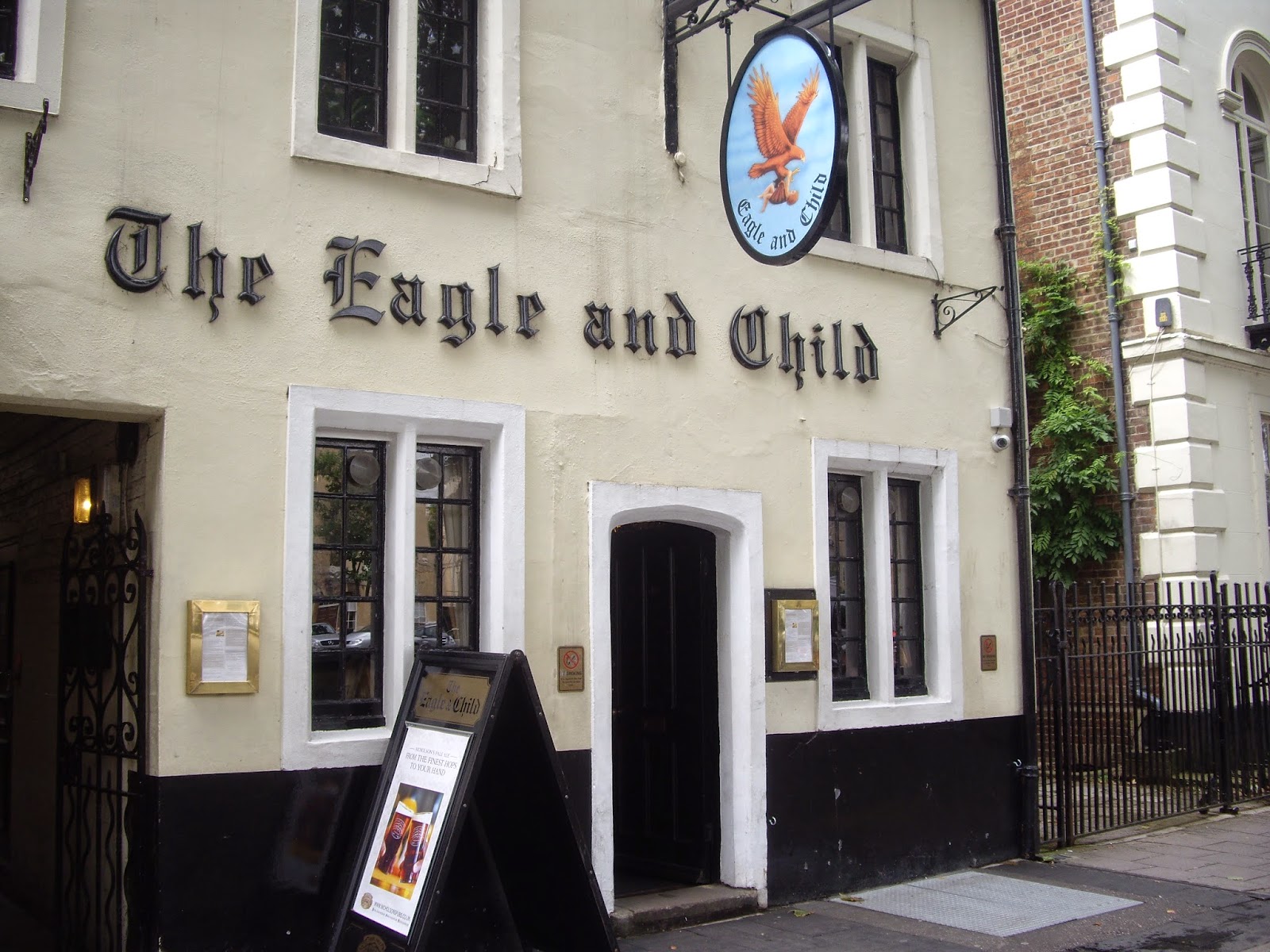
Nosotros buscábamos más la huella de otro famoso residente: J.R.R. Tolkien. También nos valía algo de C. S. Lewis. Ejem. Cero patatero. Como mucho, puedes intentar localizar las casas en que vivió Tolkien. Nos unimos a ambos en espíritu (y una cerveza) en el Eagle & Child, que según nuestra guía Lonely Planet “se remonta al año 1650” y “fue muy frecuentada en su día por Tolkien y C. S. Lewis”.


We were looking eagerly for the steps of another resident: J.R.R. Tolkien. Or we would have been satisfied if we could have found something of C.S. Lewis. So… Nothing at all. You could try and locate the houses where Tolkien lived. We joined these two writers in spirit –and a pint of beer- in the Eagle & Child, that, as our Lonely Planet says ‘goes back to the year 1650’ and it was ‘frequented in his day by Tolkien and C. S. Lewis’.


Sobre los ferrocarriles, pues una de cal y otra de arena. A Canterbury muy bien. Puntuales, con montones de asientos a pesar de ser plena temporada turística. Tranquilo salvo el ratito en que un grupo de adolescentes españoles que eran de por la zona barcelonesa nos hizo pasar vergüenza ajena por sus gritos y su comportamiento en general.


About trains. Well. Something good, something bad. Everything was great towards Canterbury. On time. With a lot of places to sit down, even in high season. Quiet, except for the little time in which a group of Spanish teenagers from near Barcelona made as feel embarrassed b/c of their shouts and their general behaviour.


A Oxford vaya. Trenes repletos. Y, a la vuelta, se saltaron uno, así que los pasajeros de dos trenes acabamos en uno solo. ¿Resultado? De pie hasta que se bajó gente en Reading.


Oxford? The trains were full. And in our journey back to London, a train ‘disappeared’ in the time table so all the tourists for two trains were in just one of them. In the end? We were standing on foot until some people left the train in Reading.


No obstante, puede que fuera algo puntual, porque hemos ido en plena temporada turística.

Nevertheless, it could have been just bad luck, b/c we went in high season.


Otro día hablaré de las tonterías que me llaman la atención y que me gustan de Londres.

Another day I’ll talk about silly things that attract my attention and that I like about London.

lunes, 18 de agosto de 2014

Museo Victoria & Alberto / Victoria & Albert Museum


Victoria and Albert Museum, London.
2/11/ 2009 Author: Rept0n1x
Fuente: Wikicommons
De acuerdo, el Museo de Alberto y Victoria (V&A) no es algo precisamente insólito. Pero al estar un poco a trasmano en South Kensington puede que lo dejes de ver. Y no deberías. Es un museo de artes decorativas. Básicamente. Encuentras de todo un poco sobre los objetos y cositas que nos hacen más bella la vida cotidiana. Bello y funcional.


Ok. So the Victoria and Albert Museum (V&A) is not something unheard of. But it’s a little bit out of the way, so you can easily decide to skip it. And you shouldn’t. It’s a decorative arts museum. Basically. Ther you will see a little bit of those objects that make life more beautiful. Beautiful and functional.


Cerámica, telas, alfombras, esculturas y pinturas, sí.

Ceramics, textiles, carpets, sculpture and paintings, yes.


Pero sobre todo objetos de la vida cotidiana. Y bueno, sí, vale, una espectacular reproducción de la columna trajana allí en un patio cualquiera. Que supongo que la original está en Roma porque los italianos no les dejaron llevársela.


But, above everything else, common objects. Well, and a great reproduction of the Trajan’s Column there in the middle of a patio. I guess the original one is still in Rome because the Italian people didn’t let any Englishman took it with him.
Como quien no quiere la cosa, un detallito pa'l jardín

Paseando por estos museos de Londres uno acaba pensando en que Dios les debió decir a los ingleses, en algún momento: creced y robad el mundo (en vez de simplemente multiplicáos).

When you walk through these London museums you think that God told the Englishmen, some time: Be fruitful and steal the World (instead of just multiply).


Pero es algo que te pasa en casi todos los grandes museos. Que son almacenes de saqueos. El arte, especialmente el arte mueble, es fácil botín de guerra. Desde los ejércitos romanos que se llevaron toda la estatuaria griega que pudieron atropar después de la toma de Corinto en adelante, pasando por Napoleón y sus saqueos de Egipto, Italia y España, la Alemania nazi, los soviéticos que se llevaron obras como compensación por su inmenso sacrificio decisivo para la derrota de los nazis, y tras la invasión de Irak en 2003, desaparecieron objetos magníficos del Museo Nacional en Bagdad.

But it’s a feeling you’ve got in nearly any great museum. Many of them are just the storehouses of sacking. From the Roman armies that took all the Greek statues after they took Corynth, Napoleon’s pillaging in Egypt, Italy and Spain, then the nazis during the II WW, and the soviets that took German art as part of the compensation for their inmense sacrifice that was decisive for the Nazi’s defeat, and after the invasion of Iraq in 2003 magnificent treasures from the Baghdad Museum disappeared.


En fin, quizá lo más me gustó fue ver ropa del siglo XVIII para acá.

Anyway, perhaps what I liked most was seeing real clothes from the 18th onwards.


Te puedes tirar todo un día en este museo. O combinarlo con dos que están pegaditos: el de Ciencias y el de Historia Natural con su enorme esqueleto de Diplodocus en el salón central abovedado.

Los tres son gratis, como es habitual en Londres. Aunque las exposiciones temporales, como una que hay actualmente sobre vestidos de boda, son pagando.


You can spend a whole day in this museum. O visit with other two museums that are next to it – The Science Museum and the Natural History Museum, with its large Diplodocus cast in the vaulted central hall.

The three of them have free entrance, as usually in London. But the temporary exhibitions, as one about wedding dresses in the V&A, are pay-per-view.


Página web / Web page - Victoria & Albert Museum.